
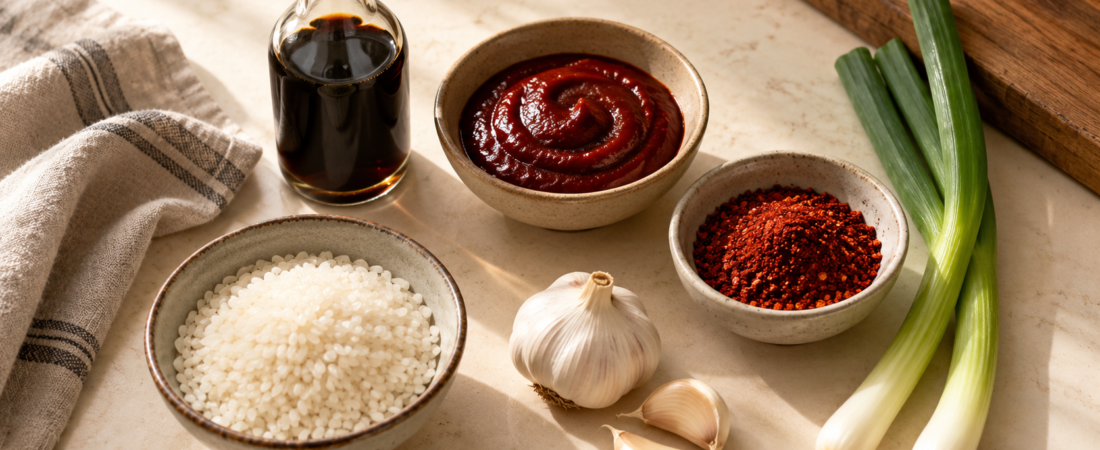
Walking into a Korean grocery shop can feel exciting—and confusing.
There are different soy sauces, tubs of chilli paste, bags of chilli flakes, and ingredients you may never have used before. If you want to cook Korean food at home, where do you start?
My advice is simple: choose one meal before you choose your pantry.
You don’t need to bring home everything at once. Start with what helps you cook something you actually want to eat, then build from there.
Start with dinner, not a shopping list
A pantry list tells you what ingredients exist. A recipe gives you a reason to buy them.
Before shopping, choose one Korean dish and read its ingredients and method. Check what you already have, then write down what is missing.
You may already have garlic, sugar, salt, rice, or an onion. Those familiar ingredients can be part of your Korean cooking too.
The aim of your first shop is to make your first meal possible.
Buy the ingredient the recipe needs
Gochujang, gochugaru, and doenjang may look like similar pantry essentials, but they do different jobs.
- Gochujang is a fermented chilli paste used in dishes such as spicy sauces and marinades.
- Gochugaru is Korean chilli powder or flakes, used in many kimchi recipes and other dishes.
- Doenjang is a fermented soybean paste used in dishes such as doenjang-jjigae.
Having one doesn’t mean you can automatically replace another.
If your chosen recipe needs gochugaru, buying gochujang instead may change its seasoning and texture. Start by matching the ingredient to the recipe rather than buying whichever red package looks familiar.
Check the supermarket before making another trip
For home cooks in Australia, Korean cooking often begins with ingredients from more than one shop.
Your usual supermarket may cover the fresh vegetables, meat, tofu, and some seasonings. A Korean or Asian grocery shop may help with the more specific ingredients.
Availability varies between shops, so check what your local store carries.
Separate your list into two parts:
My usual supermarket: the everyday ingredients for the meal.
Korean or Asian grocery shop: the specific items I still need.
This makes the extra trip more purposeful and helps you avoid buying ingredients simply because you are there.
Give every new ingredient a second job
Before buying a new pantry ingredient, ask:
“What else would I cook with this?”
If you are buying soy sauce for a marinade, find another recipe that uses the same type. If you are buying gochujang for a sauce, look for a second dish you would enjoy making with it.
You don’t need a long meal plan. Two realistic uses are a good beginning.
This is how a pantry becomes useful: the ingredients connect to meals you want to cook again.
Choose a size you will use
A large container can look like better value. But it only helps if you use it.
While you are learning, a smaller pack gives you a chance to find out whether an ingredient suits your cooking and your household’s tastes.
Before buying, check the label for storage instructions and what to do after opening. Think about where you will keep it, too.
Your fridge space, cupboard space, budget, and cooking habits are part of the decision.
Build around your family’s meals
Your Korean pantry should support the way your household eats.
If you are unsure about spicy food, begin with a recipe that suits your family’s preferences. You can explore more dishes as your confidence grows.
If your evenings are busy, choose something you can realistically prepare. A pantry full of ingredients for meals you rarely have time to cook will be less helpful than a small collection you use every week.
The useful question is:
“Will this make cooking at home easier for us?”
A simple plan for your first shop
Try this before your next grocery trip:
- Choose one Korean dish you want to cook.
- Read the recipe and check your kitchen.
- List only the missing ingredients.
- Find one more use for each new pantry item.
- Buy quantities you can realistically use.
After cooking, make a short note: what did your family enjoy, what felt confusing, and what would you make again?
Let those answers guide your next purchase.
You don’t need a complete Korean pantry to begin. You need enough to cook your first meal—and a clear reason for what you buy next.